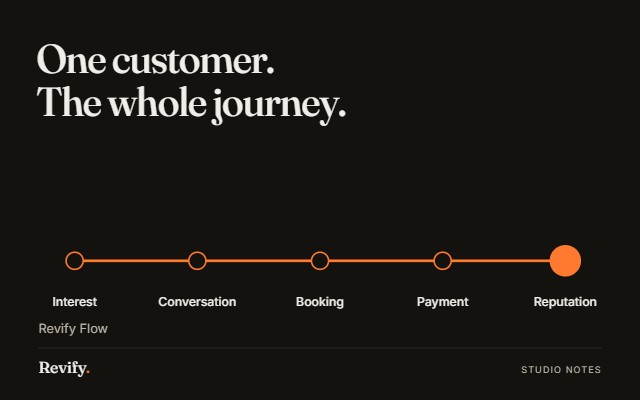
A homeowner types "roof repair near me" at 8 in the morning. Google shows a map with three businesses. She taps one, skims the photos, reads two reviews, taps the website link, looks at the homepage for maybe eight seconds, and either calls or goes back to the map.
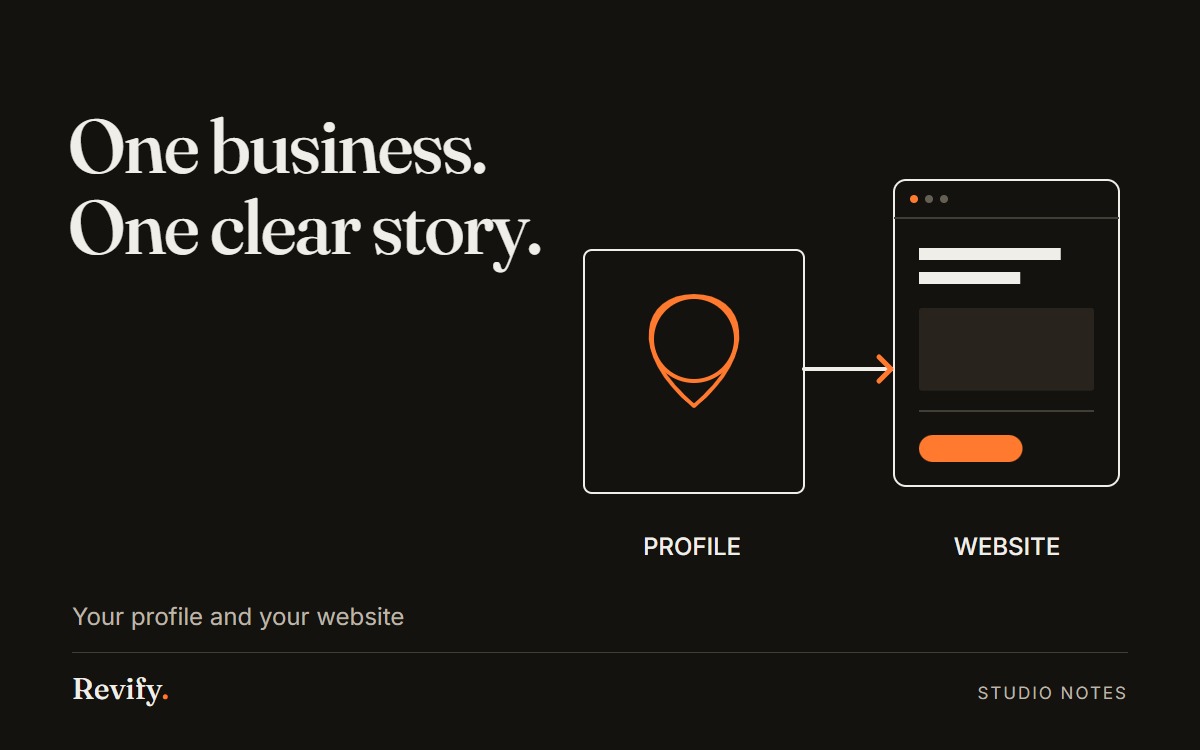
That is one continuous motion. Profile, then site, then decision. But most contractors maintain the two halves in completely different ways: the Google Business Profile gets updated when someone remembers, and the website gets rebuilt every four years. The seam between them is where trust leaks out.
Here is how to close it.
Make the boring details agree everywhere
Start with the unglamorous part, because it is the part that quietly costs you. Your business name, address, phone number and hours should be byte-for-byte identical on the profile, in your website footer, and on your contact page. Not "close enough." Identical. Suite numbers, "St" versus "Street", the same phone number in the same format.
Two specific traps:
- Tracking numbers. If you use a call tracking number on the site but the real number on Google, you have created two identities. Use the tracking number as the primary and put the original as a secondary number on the profile, or skip tracking on the main line entirely.
- Hours. If your profile says you close at 5 and your site says "24/7 emergency service," pick one and make it true in both places. Homeowners with water coming through a ceiling are unforgiving about this.
Choose one category, then build a page that earns it
Your primary category on Google does real work. "Roofing contractor" and "roof repair service" pull different searches. Pick the one that matches the jobs you actually want, then make sure your website has a dedicated page for that service, not just a bullet on the homepage.
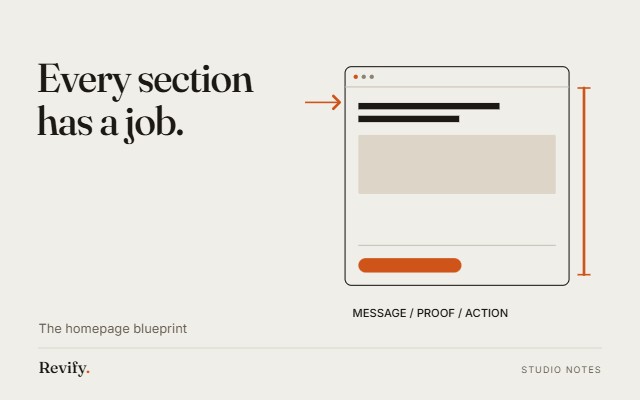
The pattern that works: one page per service you would drive across town for, each with its own photos, its own three-paragraph explanation of how the job goes, and its own quote form. Then link those pages from the services section of your profile. When someone taps through from the map to a page that is specifically about the thing they searched for, the conversation is already halfway done.
Photos are the same asset, used twice
Whatever you shoot on a job site should land in both places on the same day. The profile wants a steady drip of recent, real photos. The website wants the best six from that job, cropped and captioned.
Do not upload stock. Do not upload the same hero shot fourteen times. Google shows photo counts and recency in ways nobody can fully predict, but homeowners absolutely notice when the newest picture is from 2021.
Stanford's long-running web credibility research found that visual design was the single most frequently mentioned factor when people explained why they trusted or distrusted a site, showing up in 46.1% of their comments. That instinct does not switch off between the map listing and the homepage. It is the same eyes, ten seconds apart.
Reviews are a loop that runs through both
The review flow should be automatic and it should be the same for every customer. After a job closes, a text goes out with a direct link to your Google review page. Everyone gets the same message. You do not filter for happy customers first, you do not offer anything in exchange, and you do not edit what people write. Those are FTC rules, and they are also just the version of this that works long-term.
Then bring the reviews back to the site. Pull three or four onto the homepage with the customer's first name and the town. Put the strongest one on the service page it belongs to. A five-star average on Google plus generic testimonials on the site reads as thinner than the same reviews shown in both places.
Know which half is doing the work
Two things to watch, monthly, in about ten minutes:
- In your profile dashboard: calls, direction requests, and website clicks. That is your map performance.
- On the site: add a UTM tag to the website link in your profile so your analytics can separate map traffic from everything else.
If the profile gets plenty of views but few website clicks, the problem is usually photos or reviews. If it drives clicks but the site produces no calls, the problem is the homepage. Different medicine for different symptoms, and you cannot tell them apart without splitting the numbers.
Treat them as one system and the whole thing compounds: better photos lift the profile, the profile sends better traffic, the site converts it, the reviews come back and lift the profile again.
If you want to see what the site half of that looks like built for your business, we will put together your homepage in 48 hours and you can decide from there.