Reviews do more selling than anything you write about yourself. That makes them worth systematizing - and it also makes them one of the few areas of contractor marketing where the FTC has been explicit and active.
This is general information, not legal advice. Rules change, situations differ, and if you are running a large review operation you should talk to an actual attorney. But the basics are not complicated, and most trouble comes from three or four moves people make without thinking about them.
The lines you do not cross
Do not create or buy fake reviews. Reviews from people who never used your service, written by you, your cousin, or a vendor selling five-star packages. This includes AI-generated reviews attributed to fictional customers. It is the clearest violation there is and there is no clever version of it.
Do not pay for a positive review. You may not condition a reward on the sentiment of the review. Give me five stars and I will send you a gift card is out.
Disclose any incentive. If you offer something of value in exchange for a review - a gift card, a discount, entry into a drawing, a free filter - the incentive must be disclosed clearly in or alongside the review. Honestly, the simplest path for a home-service business is to skip incentives entirely. The disclosure obligations, platform rules, and the risk of pulling skewed reviews rarely justify the extra volume.
Do not gate reviews. This is the one that catches good, well-meaning companies. Review gating means asking customers how satisfied they were, then routing only the happy ones to Google while sending the unhappy ones to a private feedback form. It is a very common tactic sold by marketing vendors. It also produces a review profile that misrepresents your actual customer experience, and the FTC has taken a dim view of exactly that pattern. Ask everyone the same way, and let the chips land.
Do not suppress or bury negative reviews. Deleting them from your own site's testimonial widget, or using a system that hides anything under four stars, is the same problem in a different coat.
Employees and family must disclose. If a review comes from someone with a material connection to your business, that connection has to be clear. A five-star review from your service manager's wife, unlabeled, is a problem.
What good actually looks like
The compliant system is also the more effective one, which is convenient.
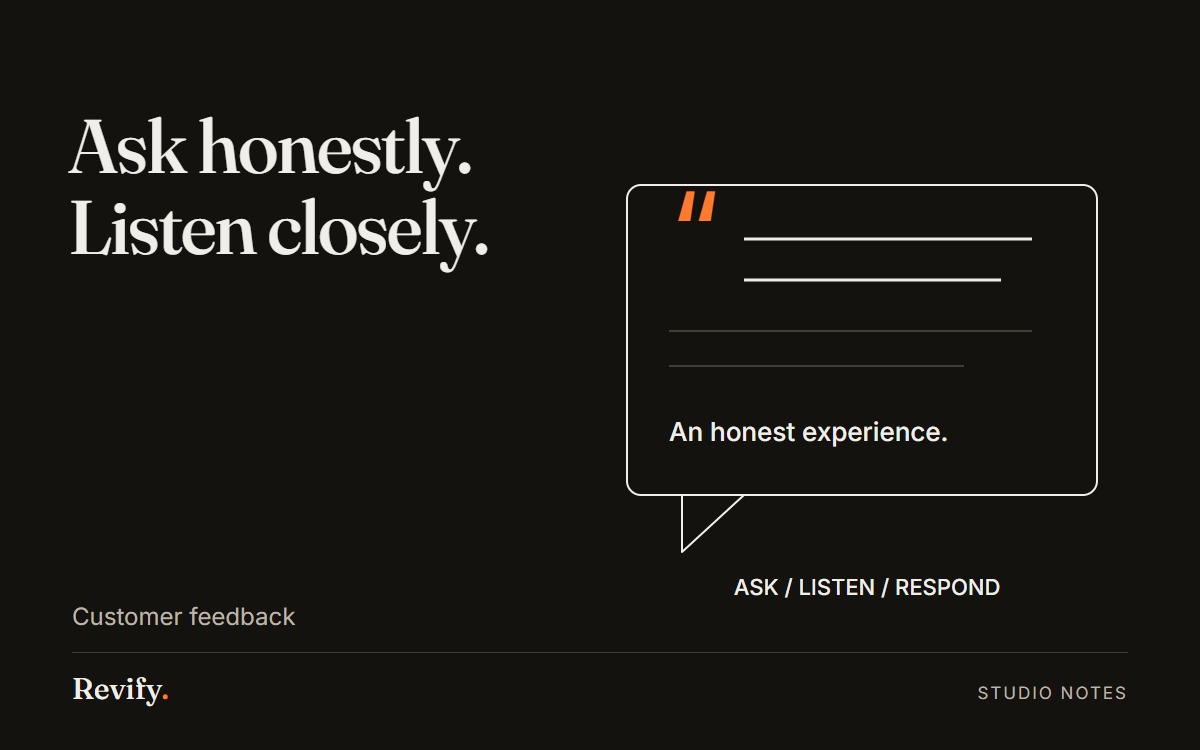
Ask everyone, every time. Same message, same timing, no filtering. Volume and recency are what platforms weight anyway, and a profile with 180 reviews averaging 4.7 reads as more trustworthy than 22 reviews averaging 5.0. Perfection looks purchased.
Ask at the right moment. For service work, within a few hours of completion, while the working AC is still noticeable. For projects, a day or two after final walkthrough. Automate it off the job-completion event in your field software so it does not depend on anyone remembering.
Text beats email, by a lot. Two sentences and a direct link that opens the review box in one tap. Every extra step - find the business, scroll, click write a review - loses people.
Ask once, remind once, then stop. A single reminder three days later is fine. Beyond that you are pestering someone who just paid you.
Make it easy to be specific. A nudge like if you have a second, mentioning which tech came out helps other homeowners produces much better reviews than a blank prompt. It is not steering sentiment, it is reducing blank-page paralysis.
Respond to all of them. Especially the bad ones. A calm, non-defensive reply to a two-star review - here is what happened, here is what we did, call me directly - is read by every future customer scrolling past and often does more for you than the five-star above it. Never argue, never disclose private details about the customer's home or finances.
Keep records. Which customer, which job, what date, what message went out. If anyone ever questions your review profile, a clean audit trail showing you asked every customer identically is the whole defense.
Where they belong on your site
Pull real reviews onto your homepage with names, neighborhoods, and job types where you have permission. A widget of anonymous five-star blobs is close to worthless - it reads as decoration, not evidence. Three specific reviews that mention actual work beat forty generic ones.
And if you display a rating, display the real one. Rounding 4.6 up to 5.0 anywhere on your site is a misrepresentation, and it takes one homeowner ten seconds on Google to catch it.
The underlying principle is boring and reliable: build a system that gets you an accurate picture of what your customers think, at volume, and then show it honestly. Companies that do good work do fine under that arrangement.
Automated, non-gated review requests are part of what we wire in behind the sites we build. The homepage comes first though, and it is free to look at.